Estate fencing · Railings · Gates
Estate fencing that frames the landscape
Traditional steel estate fencing, railings and gates for country homes, paddocks, farms and estates. Based in the New Forest, installing across the UK.
About Dukes
About Dukes Estate Fencing
Estate fencing has shaped the British countryside since the 1800s. We install it the traditional way, with long runs that follow the lie of the land, curves that sweep with a drive, and gates that hang true.
From Arnewood Manor Farm near Sway, in the New Forest, Dukes Estate Fencing installs steel estate fencing, railings and gates for private estates, equestrian yards, farms and country homes, wherever they are in the UK.
Explore our servicesWhat we do
Fencing, railings and gates
Traditional styles in steel, specified to suit the ground, the gateways, and the animals or traffic each boundary needs to manage.
Estate fencing
Continuous bar fencing for parkland, paddocks and field boundaries. Open to the view, strong enough for livestock, and able to follow slopes and curves.
Learn more 02Estate railings
Frontage, lane-side and garden railings that give a boundary a clear, permanent line without closing off the view.
Learn more 03Field gates
Traditional field gates, from decorative X-braced designs to practical gates for stock and vehicles, made to sit naturally in a run of estate fencing.
Learn more 04Driveway and pedestrian gates
Entrance gates sized to the opening, with matching side gates, hung on substantial steel posts.
Learn moreOur work
Recent projects
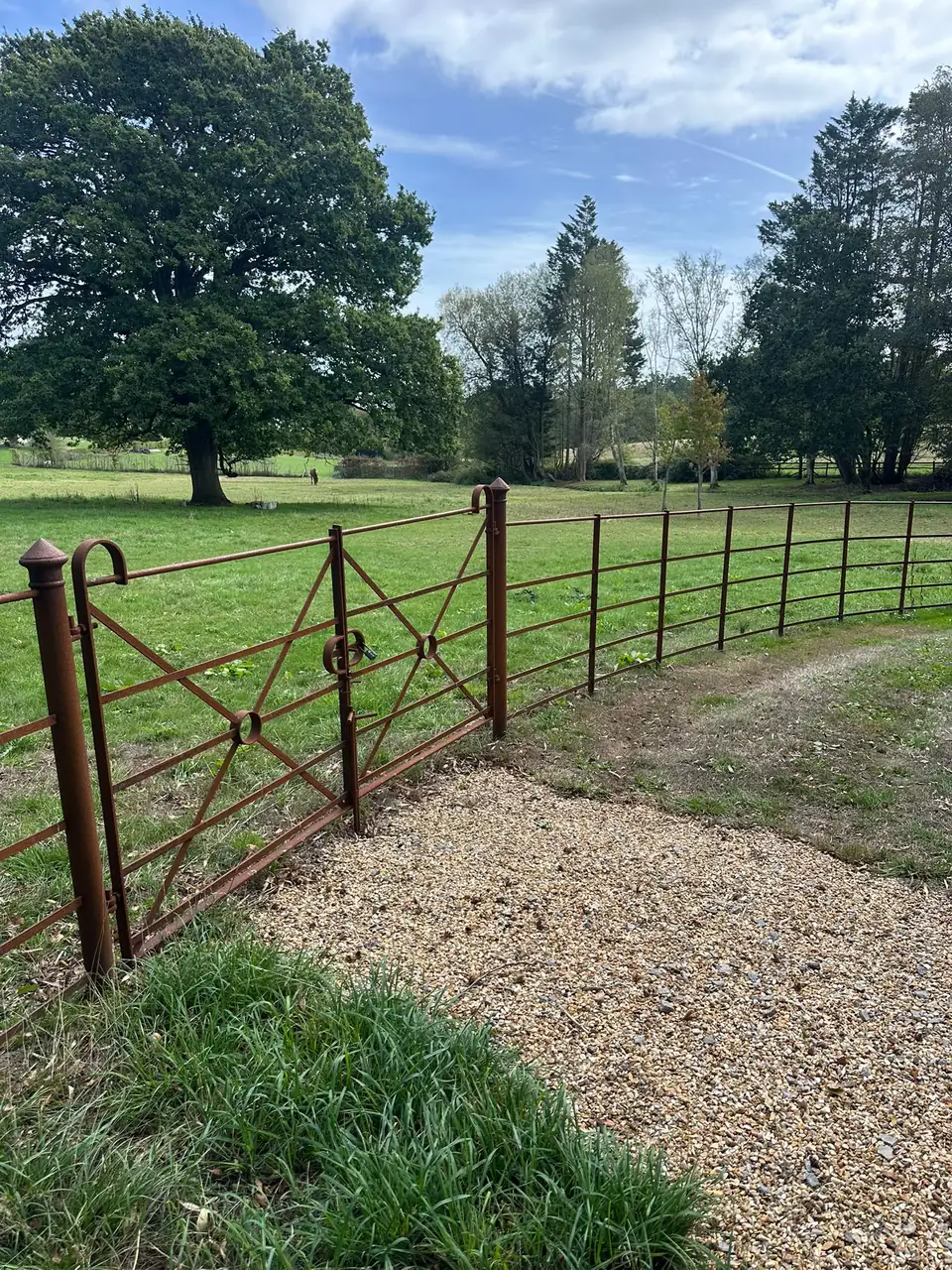
A sweeping run of estate fencing around a horse paddock, with a pair of X-braced gates onto the gravel track.
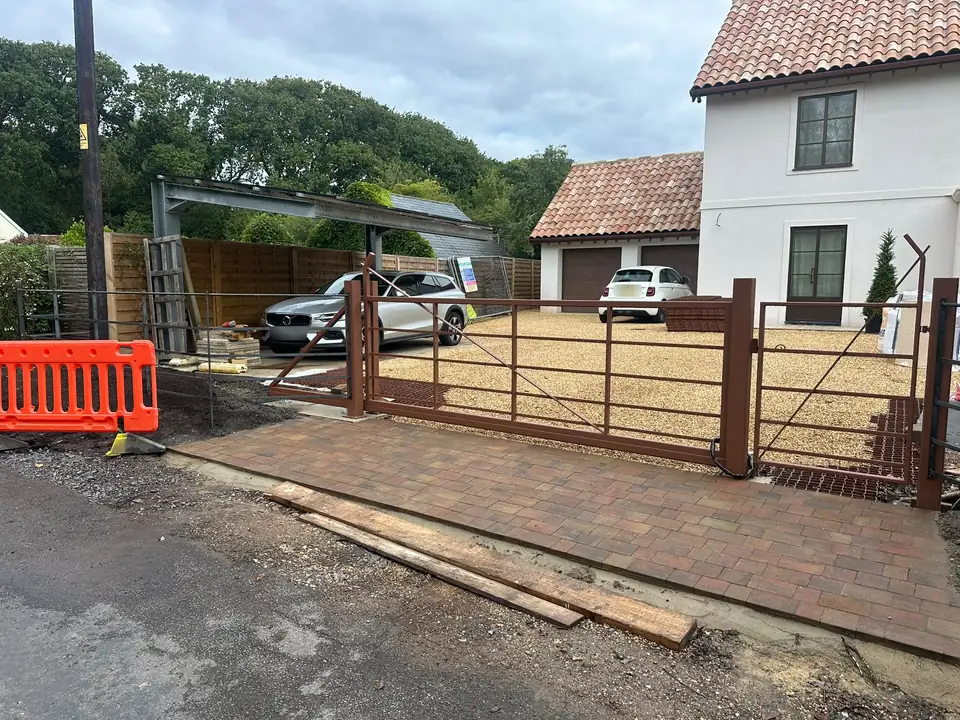
Driveway and pedestrian gates on square steel posts, with estate railing along the front of a new-build house.
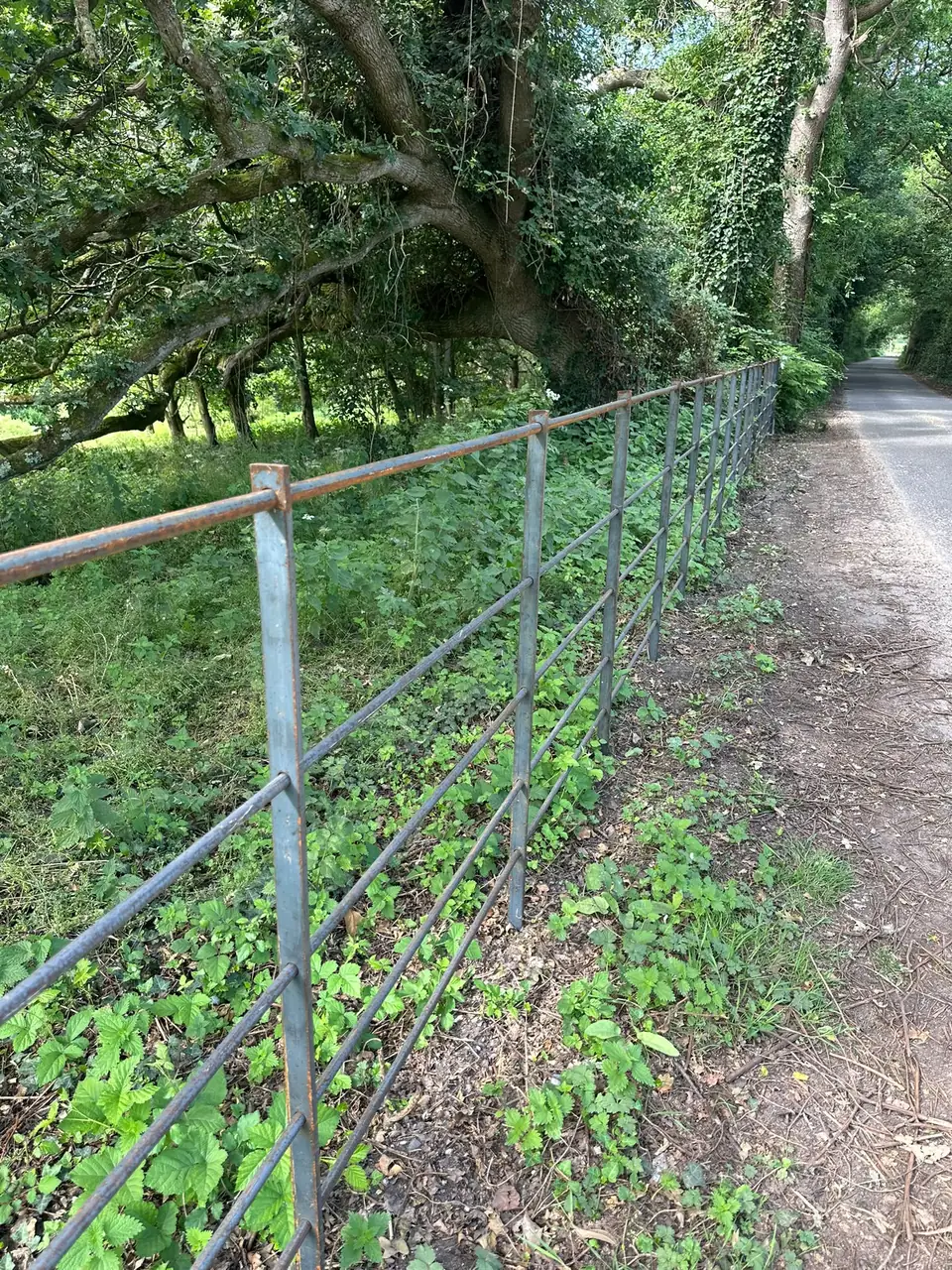
A long run of estate railing following the verge of a tree-lined lane, beneath mature oaks.
How it works
From first visit to final gate
A straightforward process, whether it's a single gate or a long boundary.
- 1
Site visit
We walk the boundary with you, measure the run, and talk through gates, access, ground conditions and livestock.
- 2
Design and quote
You get a written quote setting out the fence style, number of bars, gates and finish.
- 3
Installation
Standards are set, bars are run true to the line of the land, and gates are hung to swing and latch cleanly.
- 4
Finishing
The steelwork is finished to suit the setting, and we walk the line with you before we leave.
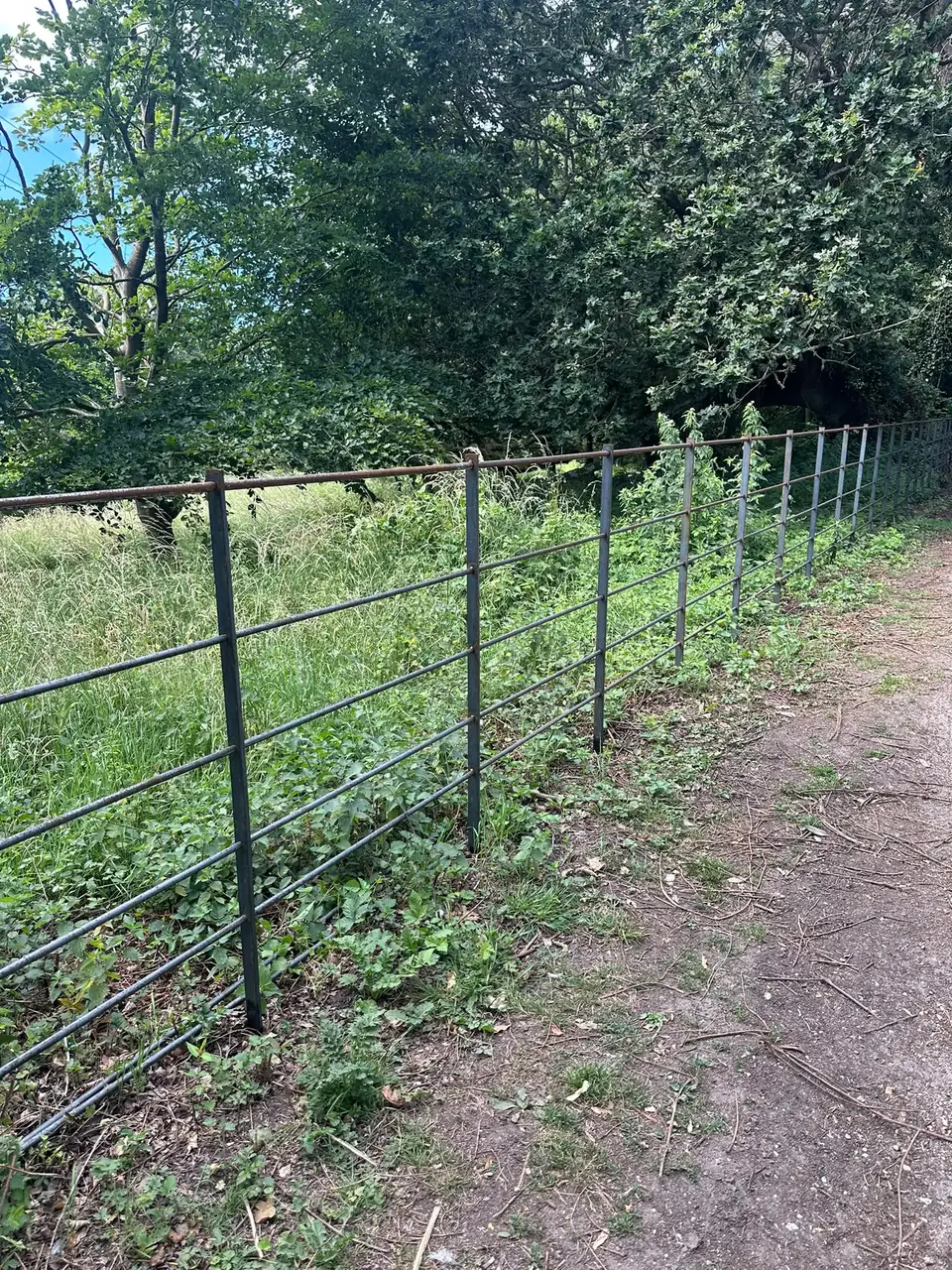
Why estate fencing
A boundary that keeps the view
Solid fences and hedges close a landscape off. Estate fencing does the opposite: it marks the line clearly while leaving the view across fields, parkland or woodland open.
- Built for the long termWell-installed steel estate fencing lasts for generations. Plenty of Victorian runs are still standing today.
- Follows the landThe bars rise and fall with the ground and sweep around curves, so the line looks natural.
- Works with livestockWidely used for horses and cattle, with extra bars where smaller animals need keeping in.
- Gates to matchField, driveway and pedestrian gates in the same style, so the boundary reads as one.
Questions
Estate fencing, explained
What is estate fencing?
Estate fencing, also called continuous bar or parkland fencing, is a traditional British steel fence. Slim upright standards carry round horizontal bars that run continuously along the line, usually five or six bars high. It has been used to enclose parkland, paddocks and drives since the 1800s.
Is estate fencing suitable for horses and livestock?
Yes. It is widely used for horses and cattle. Where smaller animals such as sheep need keeping in, extra bars can be added low down or a mesh backing fitted. We'll suggest the right specification when we see the site.
Can estate fencing follow slopes and curves?
Yes. The bars can rise and fall with the ground and sweep around a bend, which is why estate fencing suits drives and rolling parkland. Our curved paddock project is a good example.
Can you make gates to match?
Yes. We install field gates, driveway gates and pedestrian gates in styles that tie in with the fencing or railings around them, so the whole boundary looks like one piece.
Where do you work?
We're based at Arnewood Manor Farm near Sway, in the New Forest, Hampshire, and we take on estate fencing, railing and gate projects across the UK.
Start a project
Planning a new boundary?
Tell us about the site: roughly how long the run is, where the gates go, and what it needs to keep in or out. We take on work across the UK from our base in the New Forest.